The Brief
Before leaving for Summer we were advised that we would have a Photojournalism brief when we started the new year. Richard asked that we read magazines and books and in general tried to prepare ourselves for the new brief.
Luckily for me, Documentary and Photojournalism is the area of Photography that i am most passionate about, i had already been reading BJP and Foto 8 and was also reading Don Mcullin's autobiography for the 2nd time as he is one of my favourite photographers.
I knew that with me travelling to Peru for three months in summer, this would give me the perfect oppertunity to get some photographs that i could use for the brief, so tried to cover as many different aspects of life in Peru as i could, and conducted interviews and did further research in addition to this to help me build a picture story for each occasion.
The dilemma for me, was that i have over 3000 images and have covered so many issues that i didnt know where to start.
We had to show our Pecha Kucha to the class this week so i edited some of my work and chose my favourite 20 out of them- although they didn't form a particularly obvious picture story this was more a case of me showing my work than anything. This has given me a starting point for putting my final images together.
Here are the images i chose:
I noticed that i have quite a few photos of people sleeping, although not all of them are shown here, and after a discussion with Richard i plan to research photography and sleep further.

This woman was lied asleep on what i assume was her market stall in the bustling and ancient Belen Market. This market hasn't changed much through the years and still holds much history and the most quaint and fascinating stalls i have ever seen, from jungle medicines to animals skulls and snake skin, you could find anything on this market, especially things considered to be quite magical. Despite it being an 'Aladdins Cave' it was also home to some of the worst poverty i had seen in Peru, it was a very poor area and many of the market sellers lived on the market, starting as early as 4am to prepare their goods and set up the stalls. When i visited the market it was around 3pm in the afternoon and it had very much wound down hence the people sleeping on the stalls when everything was sold. There were still hundreds of stalls with plenty to buy but many of the sellers were eating lunch or sleeping by this point. It shocked me that they could eat and sleep in these conditions, there were dead animals in the street as i walked through, complete with vultures ripping apart their flesh and the most pungent smell of what i can only assume was meat or rotting flesh, it is unthinkable that people could live in these conditions day in, day out yet still seem unphased by it.

The 'typical' Peruvian working class people, always sporting miserable expressions, despite the fact that they are rich compared to their neighbors in the shanty towns.
A rareity.This little girl was smiling out of a car window whilst we were stuck in traffic and i had my camera in my hand photographing other things, i saw her and then stopped as my 'english' upbringing makes me cautious when photographing children. But as i hesitated the mother smiled at me and lifted her up closer to the window giving me reassurance that she wanted me to take a photo, this isnt about the photograph itself but more about the opposite attitudes of peruvian parents compared with parents in England. Peru could be said to be living in the past for so many reasons- this is one reason but in this case i think living in the past could be a good thing compared to our over-obsessive suspicious english view on photographing children.
Another woman sleeps in the market outside her shop
This lady didnt want me to take her photograph so put her head down, but i really like the result.


A traditional Jungle home in Iquitos.
This very special lady was sat across the road when i was out one day, i had paid a taxi driver to take me out to take some photographs as it was so dangerous to walk around with my camera and i saw her and asked him to stop the car. I crossed the road and actioned with my camera to ask for her permission to take a photograph, she smiled and nodded at me. I took a few photographs because i was really excited by her look and wanted to make sure i could get the perfect shot. This is one of 5 i edited.
A little child trapped- 'behind bars' in the village i lived in. When i walked past each day he was always there.
We were strongly advised not to photograph the police or soldiers whilst in Peru, but as usual i didnt listen and took the Photograph anyway with my excuse to my supervisor being that if you dont take risks you get no where in life, he didnt seem to impressed!
This photograph to me, reminds me of a particular issue, rather than what the photograph depicts. The man seemed to have some kind of special need or autism from watching him walk along, picking up bits of food off the floor. The men sat nearby playing cards on the street were laughing at him which i found really sad.
For me this highlighted the lack of education about special needs and learning difficulties; i had been to a special needs school and learned there that this was a little known subject in Peru.

This photograph is one i hold close to my heart. The man got onto the tiny combi bus i was on, and started to sob, no one reacted at all and left him to wallow in his own misery. My friend got up and gave him tissues as and attempt of affection and we had tears in our eyes seeing this personal display of emotion. I fought with my conscience for several minutes before photographing the man, the last thing i wanted was for him to see me, as he clearly had enough to worry about other than me with a camera in his face! So i used my zoom so that i could photograph from the back of the bus, using my coat as cover for my camera i took a few careful shots until i got the one i was happy with, all the while with butterflies in my stomach because i was so anxious to properly record what i was seeing. I wanted a photograph that would compell people to feel for him and his situation, which was almost certainly poverty, although may not have been the reason he was crying.

This little girl had been on the street with her mum earlier in the day, dancing for money and carrying bottles of water up and down for her mum. She was in a nearby cafe eating a plate of rice when i took this photograph.
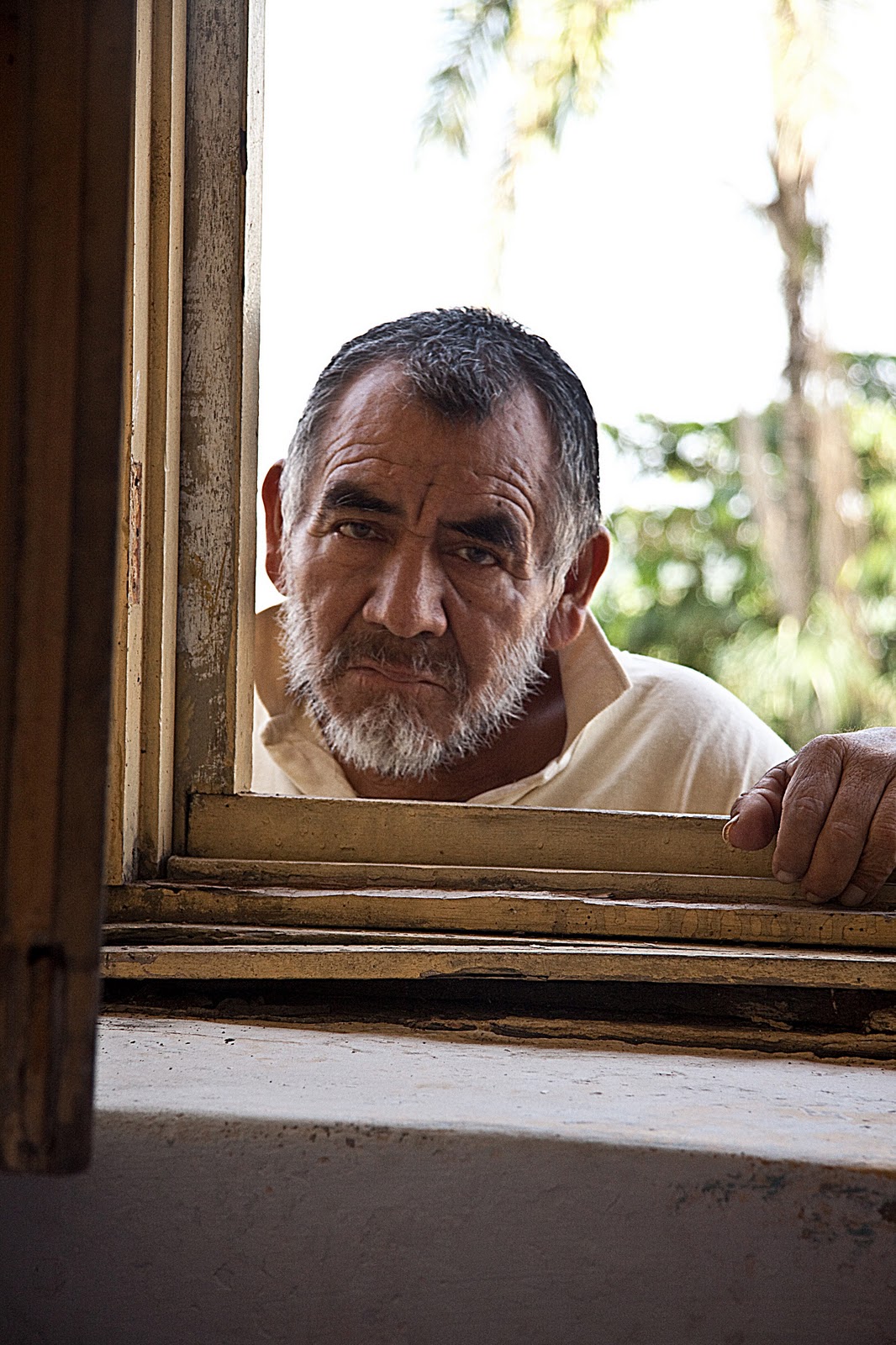
A man was peering through the window in the cafe whilst we were eating, then when i raised my camera he would hide behind the shutter then move back into view again as if he was teasing me, he continued to do this for so long that i managed to catch his face in the window.
A little girl i photographed in the Jungle, she was part of the Bora tribe who we visited and she was selling handmade jewellery that the tribe had made, this was their only source of income. They spoke very little spanish as they spoke a rare jungle dialect of the area.
After showing my presentation i received some positive feedback and developed a better idea of what i needed to do for the brief. From speaking to Richard i also decided that i definitely want to do an exhibition of my work. More information on this will be continued in my Work Based Learning posts.....


.jpg)